NSE and BSE set closing prices by auction for F&O stocks, with a random close between 3:28pm and 3:30pm IST
India's cash market now sets the closing price of stocks with listed derivatives in a 20-minute call auction instead of a last-half-hour VWAP. Under SEBI's framework, the morning pre-open auction in the cash and derivatives segments follows the same template from 7 September.
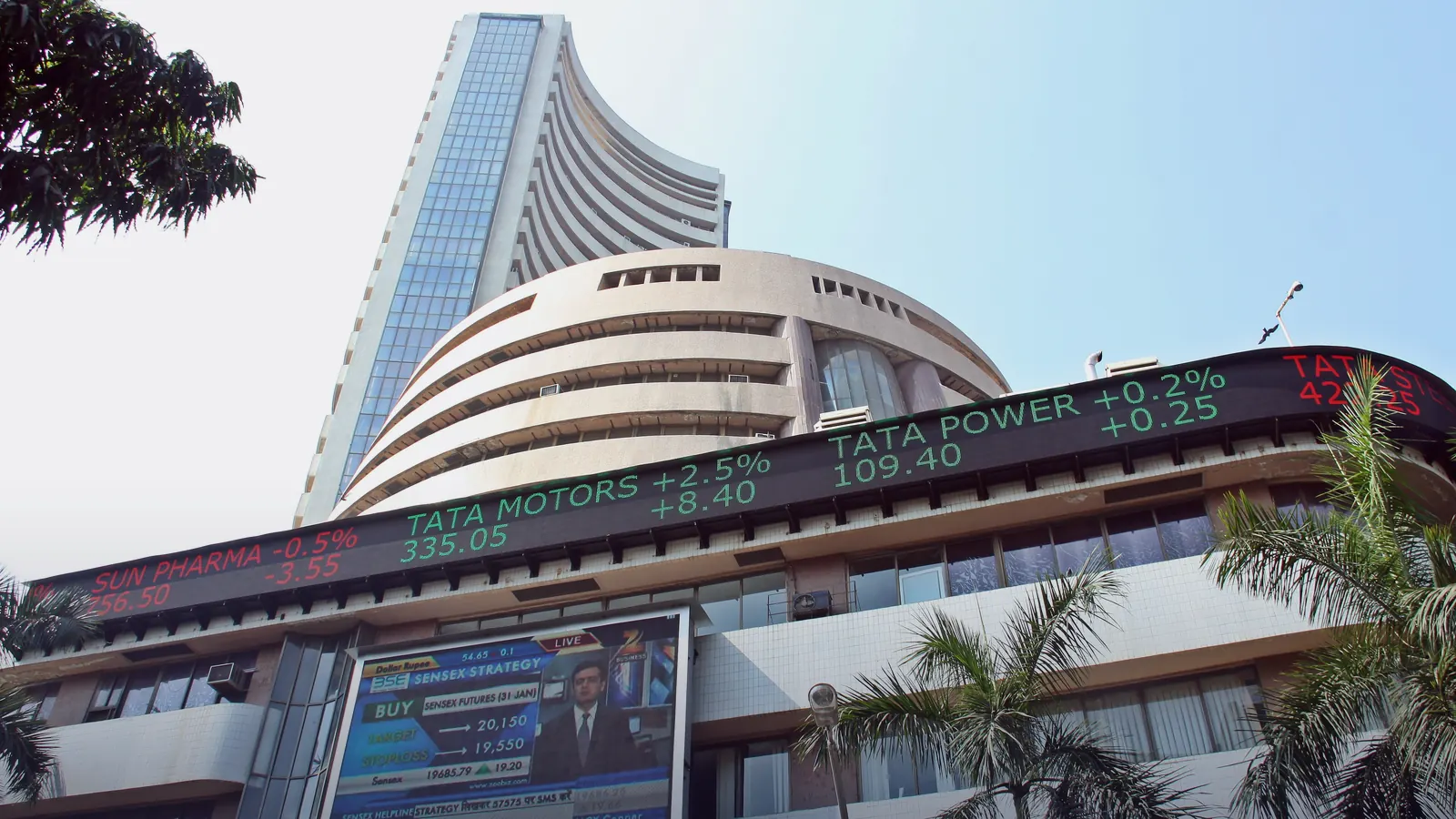
India’s two main stock exchanges, NSE and BSE, ran their first closing auction session (CAS) in the equity cash segment on 3 August 2026. NSE said in a release that evening that it was the first day of CAS, and BSE said in a 3 August notice that its trading and market data interfaces for the rollout were live from that day. The Securities and Exchange Board of India (SEBI) set out the framework in a circular dated 16 January 2026, after consultation papers in December 2024 and August 2025.
Which stocks it covers
SEBI is introducing CAS in phases. In the first phase, only cash-segment stocks with derivative contracts available close through the auction. Every other security keeps the old method: a VWAP of trades in the last 30 minutes of continuous trading.
How the auction runs
The session lasts 20 minutes, from 3:15pm to 3:35pm IST, according to NSE:
| Time (IST) | Phase |
|---|---|
| 3:15pm–3:20pm | Reference price calculation and transition from continuous trading |
| 3:20pm–3:25pm | Order entry: limit and market orders |
| 3:25pm–3:30pm | Order entry: limit orders only. Market orders cannot be modified or cancelled. A system-driven random close falls between 3:28pm and 3:30pm |
| After the random close, to 3:35pm | Order matching |
Equity derivatives keep trading until 3:40pm. BSE gave members the same CAS timings in a notice on 1 August.
Rules for the auction
- Reference price. This is the VWAP of trades between 3:00pm and 3:15pm. If there are none, the day’s last traded price is used.
- Price band. Orders are limited to ±3% of the reference price. Between 3:15pm and 3:40pm, stock futures use the same band.
- Order types. Only limit and market orders are allowed. Iceberg and stop-loss orders are not.
- Matching. The close is the equilibrium price, where the most volume can trade. Market orders take priority over limit orders.
- Carried-over orders. Unexecuted limit orders from continuous trading move into the auction, unless they are stop-loss orders, iceberg orders or priced outside the band. They rank ahead of limit orders entered during the auction for time priority, but lose that priority if modified. They are exempt from order-level margin unless modified.
- Derivatives settlement. Stock derivatives settle at a price the clearing corporations calculate as the volume-weighted average of the stock’s closing prices across all exchanges. Index derivatives settle at the underlying index’s closing value on expiry, which is built from its constituents’ closing prices.
Two exchanges, two closing prices
NSE’s 3 August release says the two exchanges keep separate order books for CAS, as they do for continuous trading. The closing prices of individual stocks, and so the index values computed from them, can therefore differ between NSE and BSE. NSE cited a study of pre-open auction opening prices from 2014 to 2024. It found more than 8.5 lakh (850,000) stock-days on which the opening price differed by more than 2%.
The release also explains why the index value on NSE’s charts stays flat between 3:15pm and 3:30pm. No continuous matching takes place, so the index stays at its last traded value. NSE shows indicative values from the running equilibrium prices beside it.
Day-one participation
NSE said 515 trading members placed CAS orders for 56,773 unique PANs (India’s tax identifiers, used here to count distinct clients) on the first day. In the same day’s pre-open auction, 403 members placed orders for 42,822 unique PANs.
Why SEBI wants an auction close
SEBI’s circular says an auction-based closing price reflects collective market consensus at the close. It adds that the auction lets passive funds trade at the closing price, which reduces their tracking error.
The pre-open auction follows from 7 September
The same SEBI circular aligns the 15-minute pre-open auction, from 9:00am to 9:15am IST, with the CAS design in both the cash and derivatives segments. The change takes effect on 7 September 2026:
| Time (IST) | Phase |
|---|---|
| 9:00am–9:05am | Limit and market orders |
| 9:05am–9:10am | Limit orders only, with a random stop between 9:08am and 9:10am |
| 9:10am–9:12am | Matching |
| 9:12am–9:15am | Transition of orders to continuous trading |
BSE told members on 3 August that its equity derivatives pre-open session will follow this template from Monday 7 September. Under its notice:
- market orders entered between 9:05am and 9:10am will be rejected
- the exchange will publish indicative equilibrium prices and imbalance data, including market-order imbalance
- the closing reference price for stock futures will be published between 3:15pm and 3:20pm, alongside CAS-eligible cash stocks
Why it matters
Analysis.
- Closing-price risk moves into an auction. Index funds and execution algorithms that targeted the last-half-hour VWAP now have to submit orders into a call auction with a random end. For these stocks, trading a last-half-hour VWAP schedule no longer replicates the closing price.
- Arbitrage near the close. Cash trading pauses between 3:15pm and the auction result, while stock futures trade on to 3:40pm inside the same ±3% band. Basis traders have a 25-minute window in which the cash leg cannot be traded continuously.
- Venue choice. Because NSE and BSE run separate auctions, a fund benchmarked to one exchange’s close may get a different price on the other. Stock derivatives settle on a cross-exchange volume-weighted close.
What we are watching
- Whether the share of daily turnover executed in the closing auction grows from the day-one participation figures.
- Whether SEBI extends CAS beyond stocks with listed derivatives.
Added 1 Nov 2026 to the Market Structure section; dated to the event, not published at the time.
Sources
- Introduction of Closing Auction Session (CAS) in the Equity Cash Segment and certain modifications in the Pre-Open Auction Session, Securities and Exchange Board of India, 16 Jan 2026
- Operational guidelines and SOP on Introduction of CAS in the Equity Cash Segment (NSE/CMTR/73362), National Stock Exchange of India, 18 Mar 2026
- Mock trading on 1 August 2026 – Go Live of Trading modalities related to Introduction of CAS (NSE/CMTR/75479), National Stock Exchange of India, 30 Jul 2026
- Closing Auction Session (CAS) Timings in Equity Segment (20260801-1), BSE, 1 Aug 2026
- Closing Auction Session was implemented under the guidance of SEBI as it promotes transparency and fair and robust price discovery, National Stock Exchange of India, 3 Aug 2026
- Modifications in Pre-open Call Auction Session in the Equity Derivatives Segment (20260803-36), BSE, 3 Aug 2026
Sources
- Introduction of Closing Auction Session (CAS) in the Equity Cash Segment and certain modifications in the Pre-Open Auction Session — Securities and Exchange Board of India, 16 Jan 2026
- Operational guidelines and SOP on Introduction of Closing Auction Session (CAS) in the Equity Cash Segment (NSE/CMTR/73362) — National Stock Exchange of India, 18 Mar 2026
- Mock trading on Saturday, August 01, 2026 – Go Live of Trading modalities related to Introduction of CAS (NSE/CMTR/75479) — National Stock Exchange of India, 30 Jul 2026
- Closing Auction Session (CAS) Timings in Equity Segment (20260801-1) — BSE, 1 Aug 2026
- Closing Auction Session was implemented under the guidance of SEBI as it promotes transparency and fair and robust price discovery — National Stock Exchange of India, 3 Aug 2026
- Modifications in Pre-open Call Auction Session in the Equity Derivatives Segment (20260803-36) — BSE, 3 Aug 2026
News and information only, not investment advice. See our disclaimer.
Spotted an error? Email [email protected]. See our editorial standards, including how we use AI and handle corrections.