
DTC switches on its Tokenization Service, with 20 participants signed and Canton and Besu connected
The Depository Trust Company said on 28 October that it has launched the DTCC Tokenization Service, which lets participants convert DTC-held entitlements in Russell 1000 stocks, index ETFs and US Treasuries into tokens and back. The SEC staff no-action letter behind the service is withdrawn three years from the date DTC launches the pilot it covers, and records that DTC will not give the tokens any collateral or settlement value.
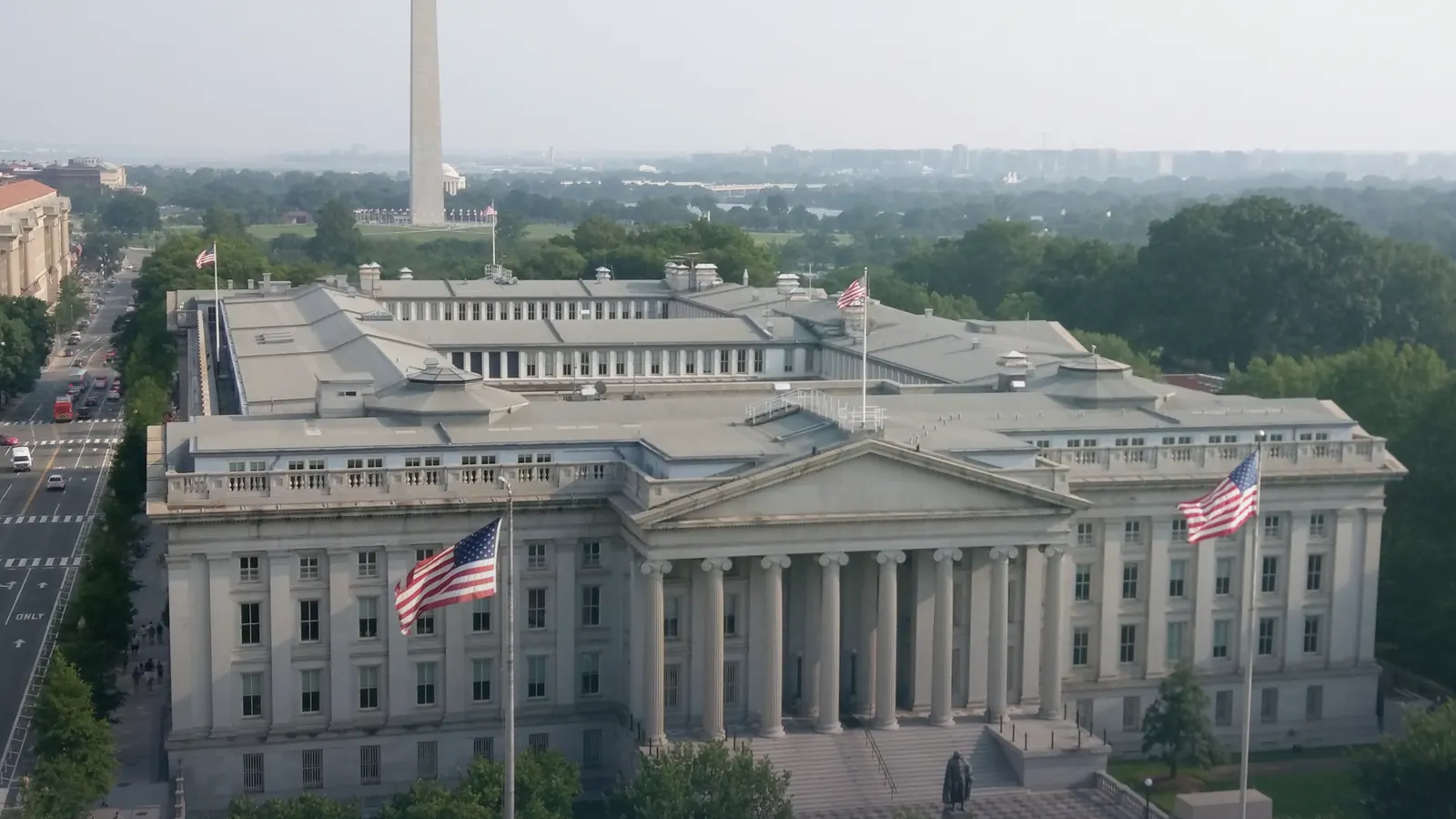
The Depository Trust Company (DTC) has “launched the DTCC Tokenization Service (DTS)”, its parent, the Depository Trust & Clearing Corporation, said on 28 October. According to the release, the service “enables the minting of tokenized representations of real-world assets held at DTC”, and entitlements “can be converted between traditional and tokenized forms and delivered to users’ digital wallets of choice”.
DTCC said the service is “currently integrated with the Canton Network and DTCC’s private Besu network, with additional blockchain networks to be added in 2027”. It said DTC has “more than $114 trillion in assets under custody”.
Who has signed up
According to the release, 20 DTC participants have signed agreements to use the service: Alpaca, Apex Clearing Corporation, Barclays, Bank of America, BNP Paribas, Brown Brothers Harriman, Citadel Securities, Citi, Clear Street, DriveWealth, Edward Jones, Fidelity Investments, Interchange Clearing, J.P. Morgan, Marex, Mirae Asset Securities (USA) Inc., Morgan Stanley, State Street, UBS and Velocity Capital LLC. DTCC said further users will be onboarded on a rolling basis.
DTCC said the service was developed with input from more than 150 firms in its DTC Digital Assets Solutions Industry Working Group. It named 17 collaborators and partners: BitGo Bank & Trust, N.A., Blockdaemon, Broadridge, DFNS, DRW, Fireblocks, HIFI, Kaleido, Matter Labs, Ondo, Prometheum Capital, Talos, Taurus, Temple Digital Group, Tradeweb, Transcend and Virtu.
“Today marks the culmination of years of work to bring tokenized securities into a regulated framework supported by trusted market infrastructure,” said Frank La Salla, DTCC’s President and CEO. Brian Steele, President of Clearing & Securities Services at DTCC, said the breadth of engagement showed “that the industry is ready to move beyond experimentation and toward practical adoption”. Nadine Chakar, Global Head of DTCC Digital Assets, said the launch was “only the beginning of DTCC’s ultimate goal” of bridging existing market infrastructure and distributed ledger technology.
The release says that about seven months after the SEC letter, “DTCC and more than 30 firms completed initial limited-production trades and multiple on-chain transactions”.
What the SEC letter allows
The service runs under a staff no-action letter from the SEC’s Division of Trading and Markets dated 11 December 2025 and signed by Associate Director Jeffrey S. Mooney. Staff said they would not recommend enforcement action against DTC under Regulation SCI, Section 19(b) of the Exchange Act and Rule 19b-4, and Rules 17Ad-22(e) and 17Ad-25(i) and (j), “in relation to DTC’s operation of the DTCC Tokenization Services”. In effect, staff will not recommend enforcement action over those rule-filing, Regulation SCI and clearing agency standards provisions while DTC runs the pilot, which the letter calls the “Preliminary Base Version”. The letter records the following points from DTC’s request:
- Eligible securities are “(i) securities in the Russell 1000 Index at the time the Preliminary Base Version launches as well as any additions to the index thereafter… (ii) U.S. Treasury securities (i.e., bills, bonds, and notes), and (iii) ETFs that track major indices, such as the S&P 500 index and Nasdaq-100 index”.
- No collateral or settlement value. DTC “would not ascribe to any Tokenized Entitlements any collateral value or settlement value for purposes of calculating a DTC Participant’s Net Debit Cap or the Collateral Monitor”.
- Wallets. Only DTC participants may register wallets, and each participant is “fully responsible for the activity in the Registered Wallet(s)”. Tokens “would only be transferable to Registered Wallets”. Participants may set up Registered Wallets for the benefit of their customers. DTC screens each wallet against OFAC requirements and can transfer tokens itself to deal with “Conditions Requiring Reversal”.
- Systems. The new systems, LedgerScan and Factory, are to be physically and logically separate from DTC’s SCI systems. They can instruct DTC’s core systems in only two ways: moving securities to or from the Digital Omnibus Account, and paying corporate-action cash such as dividends. They must hold a “Tier 2” or better rating within DTCC’s internal rating structure, which means a recovery time objective of no more than four hours and no more than two minutes of data loss.
- Reporting and disclosure. DTC will send quarterly reports to SEC staff covering the participants in the service, the value tokenised and outstanding, average daily transfer volumes, the number of wallets, the blockchains used and any use of its “root wallet” for reversals. DTC will also publish the technology standards, the list of approved blockchains and any fees.
The letter “is withdrawn without further action three years from the date DTC launches operation of the Preliminary Base Version”, and DTC is to notify staff when that happens. The 28 October release does not say whether the launch is the start date for that three-year period, or whether DTC has notified staff.
Why it matters
From a practitioner’s point of view, this is tokenisation inside the depository rather than a parallel venue. The token represents a DTC entitlement. It can only move between wallets that DTC has registered to its own participants, and DTC keeps the ability to reverse transfers. Brokers and custodians get a way to deliver mainstream US securities to a blockchain wallet without leaving the DTC framework or the SEC’s oversight of a registered clearing agency.
The limits matter just as much. The letter says DTC will give tokenised entitlements no collateral or settlement value in its risk management, so moving a position into tokens will not support a participant’s net debit cap at DTC. Activity is confined to DTC participants and the wallets they register. The eligible list is broad, but it is defined in the letter. Any larger scope, such as more asset types or giving the tokens collateral value, is likely to need fresh regulatory engagement. The release does not say whether DTCC plans to seek either.
The participant list includes global banks and custodians alongside broker and clearing firms such as Alpaca, Apex Clearing Corporation, DriveWealth and Clear Street. The release does not say how any of them will use the service. It also comes as a tokenised stock venue, TSV LLC, has filed a notice under the SEC’s Innovation Exemption, to which issuers have objected.
What we are watching
- When DTC publishes the technology standards, approved-blockchain list and fees that the letter commits it to make public.
- Which blockchains are added in 2027, and whether any is a public permissionless network.
- Whether DTC confirms 28 October as the launch date of the Preliminary Base Version, which would start the three-year clock on the no-action relief.
- Any move to give tokenised entitlements collateral value, which the letter currently rules out.
Sources
- DTCC Tokenization Service Goes Live — The Depository Trust & Clearing Corporation, 28 Oct 2026
- No-Action Letter Request Related to The Depository Trust Company's Development of the DTCC Tokenization Services (staff response) — US Securities and Exchange Commission, Division of Trading and Markets, 11 Dec 2025
- Division of Trading and Markets no-action letters (index) — US Securities and Exchange Commission, accessed 29 Oct 2026
- Paving the Way to Tokenized DTC-Custodied Assets — The Depository Trust & Clearing Corporation, 11 Dec 2025
News and information only, not investment advice. See our disclaimer.
Spotted an error? Email [email protected]. See our editorial standards, including how we use AI and handle corrections.