 Spotify
 Apple Podcasts

KRX's After-market takes Korean stock trading to 8pm KST as global investors urge caution on T+1
Korea's finance ministry briefed foreign asset managers on the continuous 4pm–8pm session, live since 14 September. In the same meeting, investors said any move to T+1 settlement should come only after preparation and pilot testing.
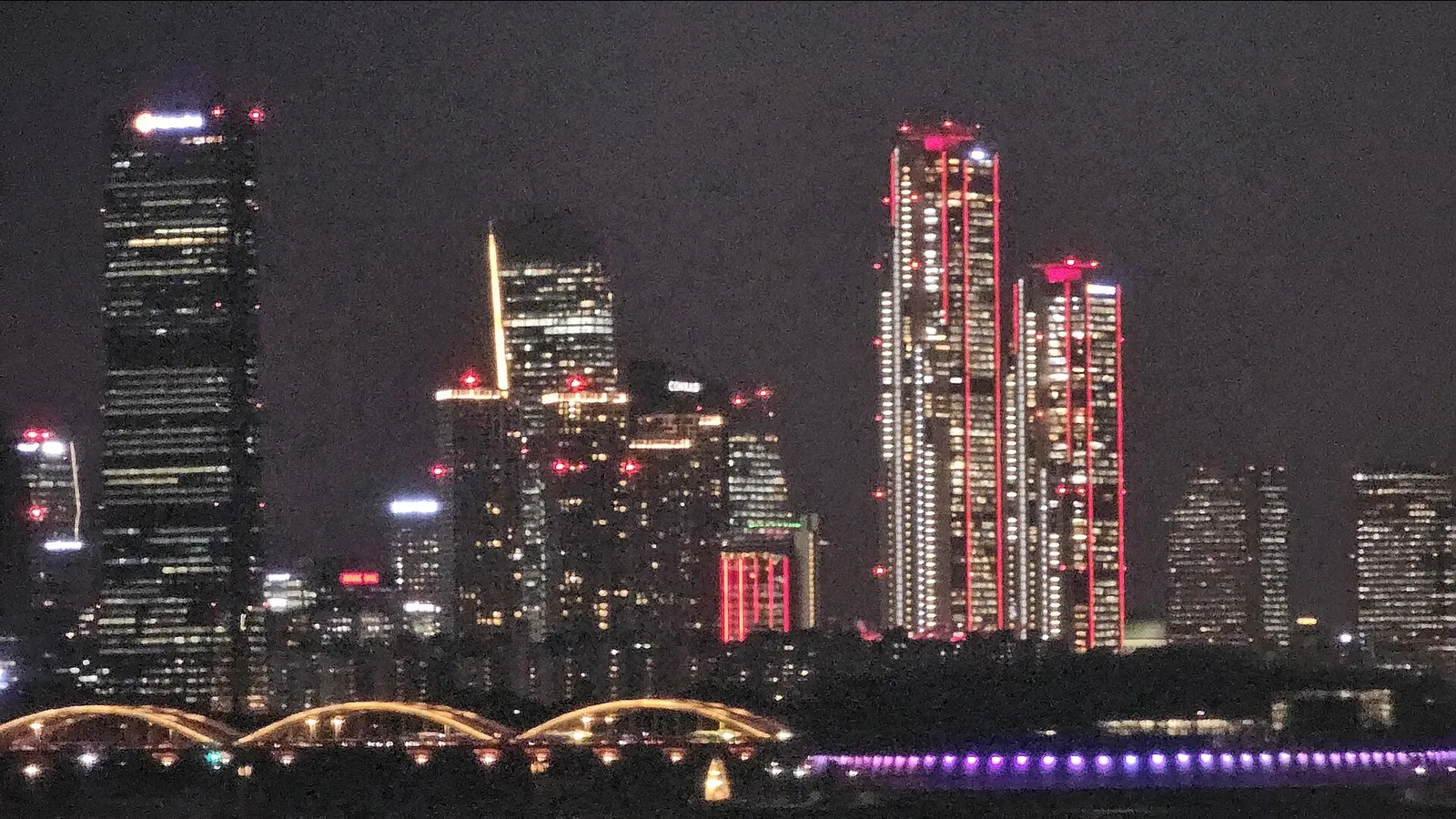
Korea’s Ministry of Finance and Economy (MOFE) held the second meeting of its Global Core Investor Consultation by videoconference on 29 September. It briefed participants on a list of foreign-exchange and capital-market reforms. The ministry’s release, dated 30 September, includes the Korea Exchange’s (KRX) new After-market among them: “Since September 14, the KRX has extended stock trading hours from 16:00 to 20:00”.
The meeting was convened by Deputy Minister for International Affairs Moon Ji Sung. Participants included:
- asset managers: BlackRock, Amundi, Northern Trust and State Street
- industry bodies: the Asia Securities Industry & Financial Markets Association (ASIFMA) and the Global Foreign Exchange Division (GFXD)
- Korean authorities: the Financial Services Commission, the Bank of Korea, the Financial Supervisory Service, KRX and the Korea Securities Depository (KSD)
How the After-market works
KRX’s trading-rules pages for the KOSPI and KOSDAQ markets describe the After-market as a session after the regular market closes, with continuous matching within the day’s price limits. The KOSPI page says it applies to both markets. The pages are in Korean; the summary below is our translation:
- Hours. Orders are accepted and matched from 4pm to 8pm KST.
- Eligible securities. Shares, foreign shares and depositary receipts. The KOSPI page also lists real estate investment trusts, ship investment companies, investment companies and infrastructure investment companies.
- Excluded. Stocks with no trade that day, stocks suspended at the regular close, administrative issues, stocks traded in single-price auctions every 30 minutes, investment-warning and investment-risk issues, abnormal-surge issues, ultra-low-liquidity issues and issues under investment caution alerts. The KOSPI page also excludes investment-attention issues.
- No carried-over orders. Orders entered during the regular session, or for after-hours closing-price trading, are not valid in the After-market.
- Matching. According to the KOSDAQ page, continuous matching as in the regular session, with price priority, then time priority.
- Price limits. ±30% of the day’s base price, the same as the regular session’s upper and lower limits.
- Order types. Limit, best-limit and most-favourable limit orders are allowed. The KOSDAQ page adds that market, mid-point and stop-limit orders are not, and that IOC and FOK conditions are allowed on limit and most-favourable limit orders.
What else the ministry briefed
The After-market was the fifth of five items MOFE presented. The other four were:
- a pilot of the International KRW Settlement Network from 21 September, with six overseas branches of Korean banks registered so far ahead of full operation in January 2027
- 38 FAQs on the FX reforms, published on 29 September
- easier overseas borrowing by foreign securities firms in Korea, planned for the fourth quarter of 2026
- changes to the KSD settlement facilitation payment system, including payment in securities instead of cash from 29 September
What investors said about T+1
Global investors at the meeting also gave views on shortening Korea’s equity settlement cycle to T+1. According to MOFE, they said any move should go ahead “only after sufficient preparation and pilot testing”. The government said it would keep in close contact with domestic and foreign participants “as it moves forward with the initiative”. Separately, investors asked the government to keep monitoring how the new measures work in practice.
Why it matters
Analysis.
- Overlap with Europe. 8pm KST is 11am in London in winter (GMT) and noon during British Summer Time. European managers can now trade Korean stocks continuously during their own morning.
- Thinner books, full limits. The After-market keeps the full ±30% daily band and bars market orders. Evening liquidity in mid- and small-cap names is likely to be thinner than in the regular session. Execution algorithms need limits on order size and price for those hours.
- Exclusions matter for coverage. Warning-list, low-liquidity and single-price issues stay out. A portfolio cannot assume every holding can be traded after 4pm.
- Settlement is next. Investors’ caution on T+1, recorded in the ministry’s own release, suggests the timetable will depend on testing. Foreign investors’ FX and custody arrangements would be most affected by a shorter cycle.
What we are watching
- Any KRX statistics on the After-market’s share of daily turnover.
- A formal T+1 consultation or timetable from MOFE, the FSC or KRX.
Added 1 Nov 2026 to the Market Structure section; dated to the event, not published at the time.
Sources
- Second Global Core Investor Consultation Held to Review FX and Capital Market Reforms, Ministry of Finance and Economy (Korea), 30 Sep 2026
- KRX, 매매거래제도: 유가증권시장 – 시간외종가/애프터마켓 (Trading rules: KOSPI market – After-hours closing price/After-market), undated rules page (accessed 1 Nov 2026)
- KRX, 매매거래제도: 코스닥시장 – 애프터마켓 (Trading rules: KOSDAQ market – After-market), undated rules page (accessed 1 Nov 2026)
News and information only, not investment advice. See our disclaimer.
Spotted an error? Email corrections@themidpointnews.com. See our editorial standards, including how we use AI and handle corrections.