 Spotify
 Apple Podcasts

MIAX can list cash-settled binary options on broad-based indexes, including the Bloomberg 500
In a notice dated 19 November, the Securities and Exchange Commission published MIAX's filing to permit European-style, cash-settled binary options on broad-based indexes that meet Rule 1802(d), including the Bloomberg 500. The change became effective under Rule 19b-4(f)(6). The Commission waived the 30-day operative delay, so the rules were operative upon the 12 November filing. Listing still depends on a public alert from the exchange. The contracts are a different product from MIAX's binary KPI options.
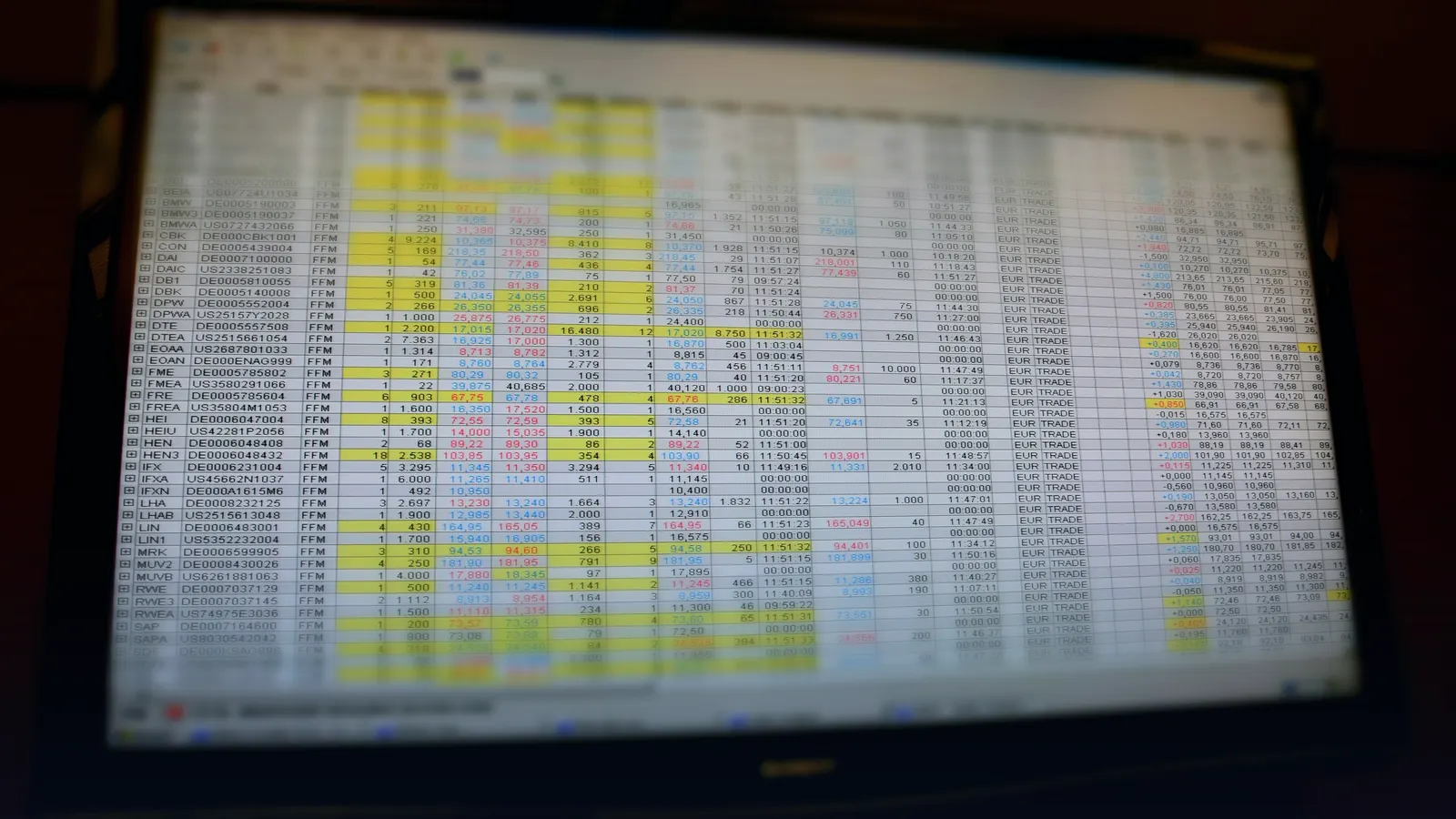
The Securities and Exchange Commission, in a notice dated 19 November (Release No. 34-106944, File No. SR-MIAX-2026-44), published a proposed rule change by Miami International Securities Exchange LLC, filed on 12 November, “to permit the listing and trading of binary options on broad-based indexes (‘binary index options’).” The change has become effective pursuant to Section 19(b)(3)(A) of the Securities Exchange Act and Rule 19b-4(f)(6). The Commission waived the usual 30-day operative delay and “designates the proposal operative upon filing.”
The rules do not, by themselves, put the contracts on the book. MIAX said it “will issue an alert publicly announcing the date it intends to begin to offer binary index options prior to them becoming available to trade on the Exchange.” In a 3 November release, issued before the Commission published the notice, Miami International Holdings said: “Subject to SEC review and operational readiness, MIAX plans to launch the binary index options, which will clear and settle at The Options Clearing Corporation (OCC), in 2027.”
The Commission may still “summarily” temporarily suspend the change “at any time within 60 days of the filing” if it appears that doing so is necessary or appropriate in the public interest, for the protection of investors, or otherwise in furtherance of the purposes of the Act. Comments are due 21 days after the notice is published in the Federal Register. As of 12:50pm UK on 20 November, the Federal Register had published MIAX’s separate binary KPI filing but not this notice, and the document was not on the public inspection list, so that deadline is not yet fixed.
All-or-nothing payouts on broad-based indexes
MIAX proposes to define a “binary option” as a contract “having an exercise settlement amount that is established at the creation of the option and only two possible payoff outcomes: either a fixed amount equal to the exercise settlement amount or nothing at all.” Binary index options would be European-style and cash-settled. A call would pay if the settlement value of the underlying index is at or above the exercise price at expiration; a put would pay only if the settlement value is below the exercise price. Contracts that finish at the money therefore pay for calls and expire worthless for puts. Exercise is automatic when the option finishes in the money, or at the money in the case of a call.
The exercise settlement amount is the exercise settlement value multiplied by a contract multiplier. The exchange would set the settlement value, on a class-by-class basis, at an amount between $1 and $1,000, unless adjusted under Rule 405, and the multiplier at not less than one. The filing’s examples are a $1 settlement value with a multiplier of 100, producing a $100 payout, and a $10 settlement value with the same multiplier, producing $1,000.
The exchange may designate a class as A.M.-settled or P.M.-settled. For A.M.-settled contracts the settlement value is the reported opening level of the index; for P.M.-settled contracts it is the reported closing level, in each case as derived from the prices of the underlying securities and as reported by the index’s reporting authority. Series may expire from one day up to 36 months after they are listed. Strikes would use the same intervals as traditional, non-binary index options, with a minimum price variation, set by class, of no less than $0.01.
Trading hours would be the same as for traditional index options: 9:30am to 4:15pm ET (2:30pm to 9:15pm UK), except that on their last trading day, P.M.-settled Bloomberg 500 options may trade only until 4:00pm ET (9:00pm UK). The last trading day for A.M.-settled contracts is the business day before expiration; for P.M.-settled contracts it is the expiration day, with the usual adjustments when expiration falls on a non-business day. MIAX said it would elect Cboe’s margin requirements for the contracts. They would clear at OCC.
The Bloomberg 500 and other eligible indexes
Proposed Rule 1818(b) would allow MIAX to approve binary index options on “any broad-based index, as defined in Rule 1801(l), on which the Exchange is approved to trade index options pursuant to Chapter 18 and that satisfies the initial listing criteria in Rule 1802(d).” The maintenance criteria in Rule 1802(e) would also apply. The filing says those listing standards relate to, among other things, “the minimum market capitalization, trading volume, and relative weightings of an index’s component securities.”
That universe “includes the B500 Index.” The Commission approved traditional options on the index, then named the Bloomberg US Large Cap Price Return Index, in April 2025 (Release No. 34-102959, SR-MIAX-2025-08). A later immediately effective change recorded the rename to the Bloomberg 500 Index. The 19 November notice describes the B500, in general, as “a float market-capitalized weighted benchmark of the approximately 500 most highly capitalized U.S. companies,” and says the exchange “plans to list options on the B500 Index.” Binary index options would be “a separate class from other options overlying the same index.”
MIAX also noted that the rules in Chapter XVIII, as amended, “are incorporated by reference into the rulebooks of the Exchange’s affiliate options exchanges, MIAX PEARL, LLC, MIAX Emerald, LLC, and MIAX Sapphire, LLC.”
Position limits, but no exercise limits
Position limits would apply per expiration and would scale with the payout and, in some cases, with the size of the underlying index. Where traditional options on the same index have no position limit under Rule 1804, the limit would be 15,000 times the ratio of 10,000 to the exercise settlement amount. The filing’s examples are 15,000 contracts per expiration if the payout is $10,000, 150,000 contracts if it is $1,000, and 12,500 contracts if it is $12,000.
Where traditional options on the same index do have a position limit, the cap would be that same 10,000-to-payout ratio multiplied by a number of contracts that depends on the index’s market capitalisation relative to the S&P 500: 10,000 contracts if the ratio is at least 0.50, 5,000 if it is below 0.50 but at least 0.25, and 2,500 if it is below 0.25 but at least 0.10. For indexes below 0.10, MIAX would have to seek the Commission’s approval before setting a limit. Positions in binary index options on the same index with different exercise settlement amounts would be aggregated. Binary index options would not be aggregated with traditional options on the same index, with options on the index’s component securities, or with binary index options on a different index.
Specified hedged or covered positions — cash or a related security sufficient to meet the settlement obligation, or a traditional option on the same index that is sufficient to meet it — would be allowed a limit of five times the otherwise applicable cap. There would be no exercise limits, which MIAX said would “serve no purpose” because the contracts are automatically exercised.
A different product from MIAX’s KPI binaries
The filing does not amend MIAX’s rules for binary options on company key performance indicators. Those were the subject of a separate immediately effective change, SR-MIAX-2026-45 (Release No. 34-106918), filed on 9 November, in a Commission notice dated 17 November. That notice appeared in the Federal Register on 20 November (91 FR 75361), with comments to be submitted on or before 11 December 2026. In it, MIAX treated the two products as distinct, referring to SR-MIAX-2026-44 for the index-option multiplier and for a new Interpretation and Policy .05 to Rule 521, and placing the KPI contracts in a different rule. Unlike the index binaries, which would clear at OCC, MIAX said it will not list the KPI contracts until a designated registered clearing agency is authorised and operationally ready. The MidPoint News has reported the wider wave of binary KPI filings, including immediately effective changes at NYSE Arca and NYSE American.
Not a new product class, but a larger venue
“Binary options on broad-based indexes are not novel,” MIAX said. The Commission approved Cboe’s listing of them in 2008 (Release No. 34-57850, SR-CBOE-2006-105). MIAX said “Cboe currently lists binary options on broad-based indexes.” Cboe’s own trade notice shows it began listing P.M.-settled binary options on the Mini-S&P 500 Index, root symbol XSPBW, from 15 June 2026. In July 2026 the Commission approved amendments to Cboe’s binary-option rules, including A.M. and P.M. settlement for all binary index options, position limits on a per-expiration basis, and binary options on the Cboe Magnificent 10 Index, which is not a broad-based index. MIAX’s filing is confined to broad-based indexes that meet Rule 1802(d).
The Commission also granted accelerated approval, in an order dated 30 April 2026, of Nasdaq MRX rules to list binary options on the Nasdaq-100 and Nasdaq-100 Micro indexes (Release No. 34-105342, SR-MRX-2026-05). In a separate notice dated 19 November (Release No. 34-106942, SR-MRX-2026-46), MRX said it “plans to begin listing and trading binary options on the Nasdaq-100 index, under the symbol ‘NDXB’” in November 2026; we have not confirmed that trading has started. NYSE American already has rules for broad-based index binary options, and in October it made an immediately effective change to its Binary Return Derivatives rules, which The MidPoint News has reported. MIAX said all of its proposed rules “are based on the existing rules of other options exchanges,” and it asked the Commission to waive the operative delay so that it could “immediately compete with other options exchanges for order flow in binary index options.” The Commission found that the proposal “raises no new or novel legal or regulatory issues” and that the waiver was consistent with the protection of investors and the public interest.
Competition with off-exchange platforms
Beyond other listed-options markets, MIAX said the change would “meet the demands of investors that currently may trade products structured in substantively the same manner as the proposed binary index options in other markets.” It pointed to the over-the-counter market and to “various market platforms that are not registered as national securities exchanges” that “currently offer products structured in substantively the same manner as the proposed binary index options, including on securities indexes and with settlement at varying points of the day.” Those venues, it said, “do not offer investors the benefits of centralized liquidity, market transparency, or securities regulations intended to protect investors.” The exchange said its proposal “would contribute to leveling the playing field with these alternative markets.”
MIAX argued that binary options on securities indexes are securities under section 3(a)(10) of the Act, which includes a “put, call, straddle, option, or privilege on any security … or group or index of securities,” and that they are not swaps. “Therefore, the Exchange believes transactions in binary options on securities indexes must occur on a national securities exchange, subject to Commission jurisdiction and oversight.” Broker-dealers would have to furnish customers with the Options Disclosure Document before accepting an order, as required by Rule 9b-1.
The filing names neither prediction-market venues nor CFTC event contracts. Written comments were “neither solicited nor received” before MIAX filed.
Why it matters
Once they are listed, these contracts would be SEC-regulated, OCC-cleared, exchange-listed options, with the Options Disclosure Document, listed-options margin, OPRA market data and the existing brokerage channel that already distributes equity and index options. That is a different legal and operational path from event contracts listed on CFTC-registered venues, even where the economic question is similar: whether a broad index finishes above or below a stated level at a stated time. MIAX’s own justification is that substantively similar payoffs already trade over the counter and on platforms that are not national securities exchanges, and that it wants a listed alternative.
The notice should not be read as a go-live. The rules are operative, the Commission can still suspend them within 60 days of the 12 November filing, and MIAX has said it will only start offering the contracts after a public alert. As of 3 November, it planned that launch for 2027, subject to operational readiness. The comment deadline will run from Federal Register publication, which had not occurred when this article was prepared.
Sources
- Release No. 34-106944 (SR-MIAX-2026-44), notice dated 19 November 2026
- Exhibit 5 to SR-MIAX-2026-44, proposed rule text
- MIAX Options Exchange rule filings
- Miami International Holdings release, 3 November 2026
- Cboe Options trade notice: Reminder - Cboe Options to List Mini S&P 500 Index Binary Options (C2026060800)
- Release No. 34-106942 (SR-MRX-2026-46), notice dated 19 November 2026
- Release No. 34-106918 (SR-MIAX-2026-45), 91 FR 75361, 20 November 2026
- 15 U.S.C. § 78s, United States Code (2023 edition)
- 15 U.S.C. § 78c, United States Code (2023 edition)
- 17 CFR 240.19b-4
- Release No. 34-57850 (SR-CBOE-2006-105), 73 FR 31169, 30 May 2008
- Release No. 34-105342 (SR-MRX-2026-05), 91 FR 24299, 5 May 2026
- Release No. 34-105936 (SR-CBOE-2026-032), 91 FR 46205, 22 July 2026
- Release No. 34-102959 (SR-MIAX-2025-08), 90 FR 19236, 6 May 2025
- Release No. 34-103635 (SR-MIAX-2025-34), 90 FR 38519, 8 August 2025
- The MidPoint News, 19 November 2026: 24X files proposed rules for an options market, including KPI binaries
- The MidPoint News, 16 November 2026: NYSE Arca and NYSE American have adopted rules to list binary KPI options
- The MidPoint News, 30 October 2026: NYSE American moves ByRDs binary options to closing-auction settlement
News and information only, not investment advice. See our disclaimer.
Risk: Prediction markets carry risk. You can lose the money you stake, and these markets may be restricted or unlawful where you live.
Spotted an error? Email corrections@themidpointnews.com. See our editorial standards, including how we use AI and handle corrections.