
SEC's Selway ties any Rule 611 change to best-execution modernisation
The SEC's trading and markets director says any change to the trade-through rule, which the Commission has proposed rescinding, must be coordinated with modernised best-execution requirements. FINRA's review of its own best-execution guidance is running in parallel.
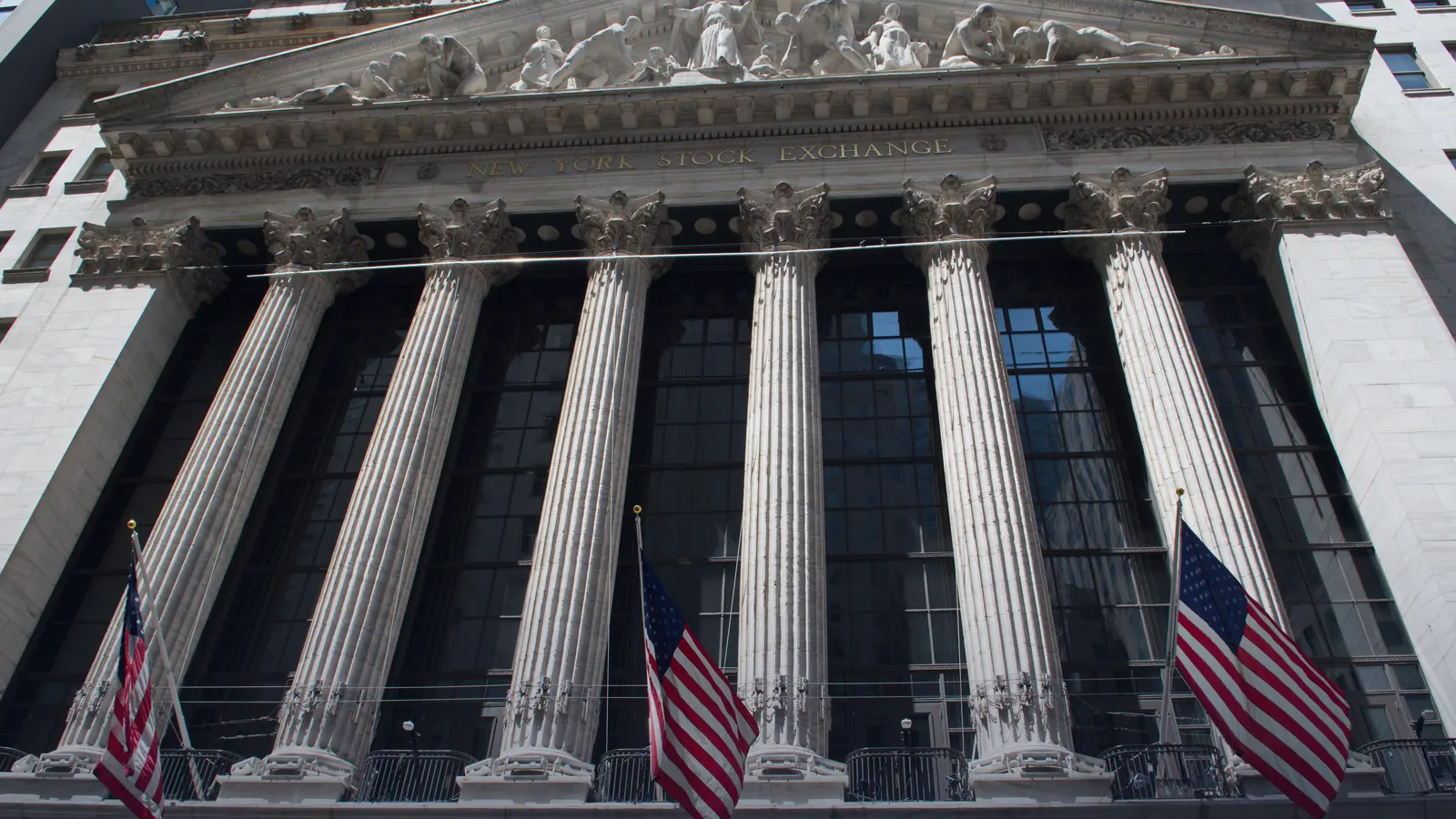
Any change to Rule 611 of Regulation NMS, the trade-through rule, should be coordinated with an update of best-execution requirements, according to Jamie Selway, Director of the Securities and Exchange Commission’s Division of Trading and Markets. The Commission has proposed rescinding Rule 611 but has not adopted that change, and Selway gave no date for a decision.
Selway said “coordination of any change to Rule 611 with modernization of Best Execution requirements is critical” in a 14 October speech to the Security Traders Association’s annual market structure conference, published by the SEC. He said he was speaking in his official capacity, but that his remarks did not necessarily reflect the views of the Commission, the Commissioners or his Division colleagues.
What is on the table
On 11 June the SEC proposed rescinding Rule 611, which bars trading through protected quotations displayed by other trading centres, and Rule 610(e), which restricts locked and crossed quotations (Release No. 34-105655, File No. S7-2026-20, published at 91 FR 36656 on 17 June). “After two decades of Rule 611, it is high time that the Commission review its unintended consequences that have hindered — rather than enhanced — the long-term growth of our markets,” SEC Chairman Paul Atkins said at the time. Comments were due by 17 August.
“The Division continues to analyze over 1200 comment letters, as well as input from a number of meetings and two public roundtables, held last year,” Selway said. The comment file also records meetings between SEC staff and market participants into October.
He said two consistent themes had emerged. The first was that including only automated quotes in the National Best Bid and Offer (NBBO) is an important step if it is to remain a central benchmark for execution quality. The second was the need to coordinate any Rule 611 change with modernised best execution.
FINRA’s review runs in parallel
Best execution for broker-dealers sits mainly in FINRA Rule 5310, and FINRA is already reviewing its guidance. In July it published Regulatory Notice 26-15, requesting comment on modernising its best-execution guidance “in light of significant market structure developments—including the SEC’s proposal to rescind the trade-through rule under Regulation NMS”. Comments closed on 25 September. Selway noted in his speech that FINRA held a best-execution roundtable on 13 October.
FINRA said it “preliminarily believes” the text of Rule 5310 remains appropriately calibrated, but that updates to its interpretive guidance “may be warranted”. The notice asks how firms should decide whether to connect to, or disconnect from, venues without the trade-through rule; whether the NBBO will remain the benchmark for price improvement; how access fees should weigh against displayed prices; and how best execution applies in extended hours. FINRA has not said when any revised guidance will be issued.
Access fees and tick sizes
The proposal also highlighted how Rule 611 interacts with Rule 610, which caps access fees, and Rule 612, which sets minimum pricing increments. Selway said Chairman Atkins had directed the Division at the 11 June open meeting to review both rules by year-end. “Our review is well underway, and we fully expect to make recommendations to the Commission coincident with any change to Rule 611,” he said. These would be staff recommendations to the Commission, not rule changes; any amendment to Rules 610 or 612 would need its own Commission action.
Selway added that, by the end of next year, he believed further changes to the formula for allocating market data revenue “can—and should—be made to provide effective incentives to increase displayed liquidity in the marketplace”.
The numbers behind the debate
The SEC’s proposing release describes how fragmented the market is. In January 2026, NMS stocks traded on 17 exchanges, with three more approved but not yet operating, and on off-exchange venues that included 33 NMS Stock ATSs. The three largest exchanges by dollar volume had over 30% of all dollar volume. Of the remaining 14, ten each had less than 1%. Off-exchange venues, including ATSs and wholesalers, handled about 49.9% of share volume.
The Midpoint view
This section is analysis by The Midpoint, not reporting.
Routing becomes a choice rather than an obligation. Today every smart order router is built around protected quotes: exchange connectivity, intermarket sweep orders (ISOs) and exception handling all exist partly so that a firm does not trade through any of them. Without Rule 611, the question changes from “which quotes must I respect?” to “which venues give me the best result once fees, fill rates and signalling are counted?” That is a best-execution question, which is why the SEC’s Division is linking the two and FINRA is reviewing its guidance at the same time.
The long tail of exchanges is most exposed. Ten venues have less than 1% of the market each. For some of them, protected-quote status is a large part of the reason anyone connects. If rescission is adopted and brokers no longer have to reach every top-of-book quote, connectivity, market data and fee spending would be reviewed venue by venue. FINRA’s question on connect and disconnect decisions points to the same issue.
Exchanges vs ATSs and wholesalers. Off-exchange venues already handle about half of all volume, so repeal would not simply be a gift to dark venues. Allowing locked markets (the 610(e) piece) and a review of tick sizes could help exchanges compete on price; the proposal itself says improved efficiency and liquidity on exchanges could allow them to better compete with off-exchange market makers for order flow. Much depends on the detail of any access-fee and tick-size recommendations.
Queue priority and the value of displaying. If quotes are no longer protected across venues, a quote’s value depends more on where it is displayed. Liquidity providers may concentrate on venues where they get filled, making queue position at the deepest venues worth more. Whether displayed liquidity grows or shrinks is the main open question, and it ties back to commenters’ focus on keeping the NBBO a credible benchmark.
What desks should do now. List every place where Rule 611 is assumed: SOR logic, ISO flags, compliance surveillance, TCA benchmarks, and vendor and broker dependencies. Ask brokers how their routing tables and regular and rigorous reviews would change. Plan testing on the basis that a Commission decision on Rule 611, any implementation period and the move to 23-hour trading could overlap.
What we are watching
- Whether the Commission adopts the proposed rescission, in what form, and what implementation period it allows.
- The detail of the access-fee and tick-size recommendations Division staff expect to make at the same time as any change to Rule 611.
- The timing and content of any revised FINRA best-execution guidance following Regulatory Notice 26-15.
- How exchanges, particularly smaller venues, change fees and positioning in response.
Updated 26 October 2026: an earlier version of this article, published at a different address, reported a timing remark attributed to a third-party report that we could not verify against a primary record. It has been removed, along with material that relied on that report, and the article has been re-angled around the SEC’s published remarks and the FINRA and SEC documents cited above.
Sources
- How Soon is Now? Remarks at the Security Traders Association’s 93rd Annual Market Structure Conference (Jamie Selway) — U.S. Securities and Exchange Commission, 14 Oct 2026
- The Trade-Through Rule and Locked and Crossed Markets Provisions of Regulation NMS (Release No. 34-105655; File No. S7-2026-20) — U.S. Securities and Exchange Commission, 11 Jun 2026
- Proposed rule: Release No. 34-105655 (SEC issued version) — U.S. Securities and Exchange Commission, Jun 2026
- SEC Proposes Rescission of Regulation NMS Rules 611 and 610(e) (Press Release 2026-54) — U.S. Securities and Exchange Commission, 11 Jun 2026
- Comments on File No. S7-2026-20 — U.S. Securities and Exchange Commission
- Regulatory Notice 26-15: FINRA Requests Comment on Modernizing FINRA’s Best Execution Guidance — FINRA, 24 Jul 2026
News and information only, not investment advice. See our disclaimer.
Spotted an error? Email [email protected]. See our editorial standards, including how we use AI and handle corrections.