 Spotify
 Apple Podcasts

United States and CFTC sue Arkansas and Louisiana after a Louisiana court order bars 32 firms from offering event contracts in the state
The United States and the Commodity Futures Trading Commission have sued Arkansas and Louisiana, asking the federal courts to declare state law pre-empted as applied to event contracts traded on CFTC-regulated exchanges, and to bar the states from enforcing those laws against CFTC-regulated firms. The CFTC announced both cases on 13 November. It said Arkansas is the 11th state it has sued and Louisiana the 12th. The Louisiana complaint was filed that day in the Eastern District of Louisiana. The Arkansas complaint was filed on 12 November in the Eastern District of Arkansas.
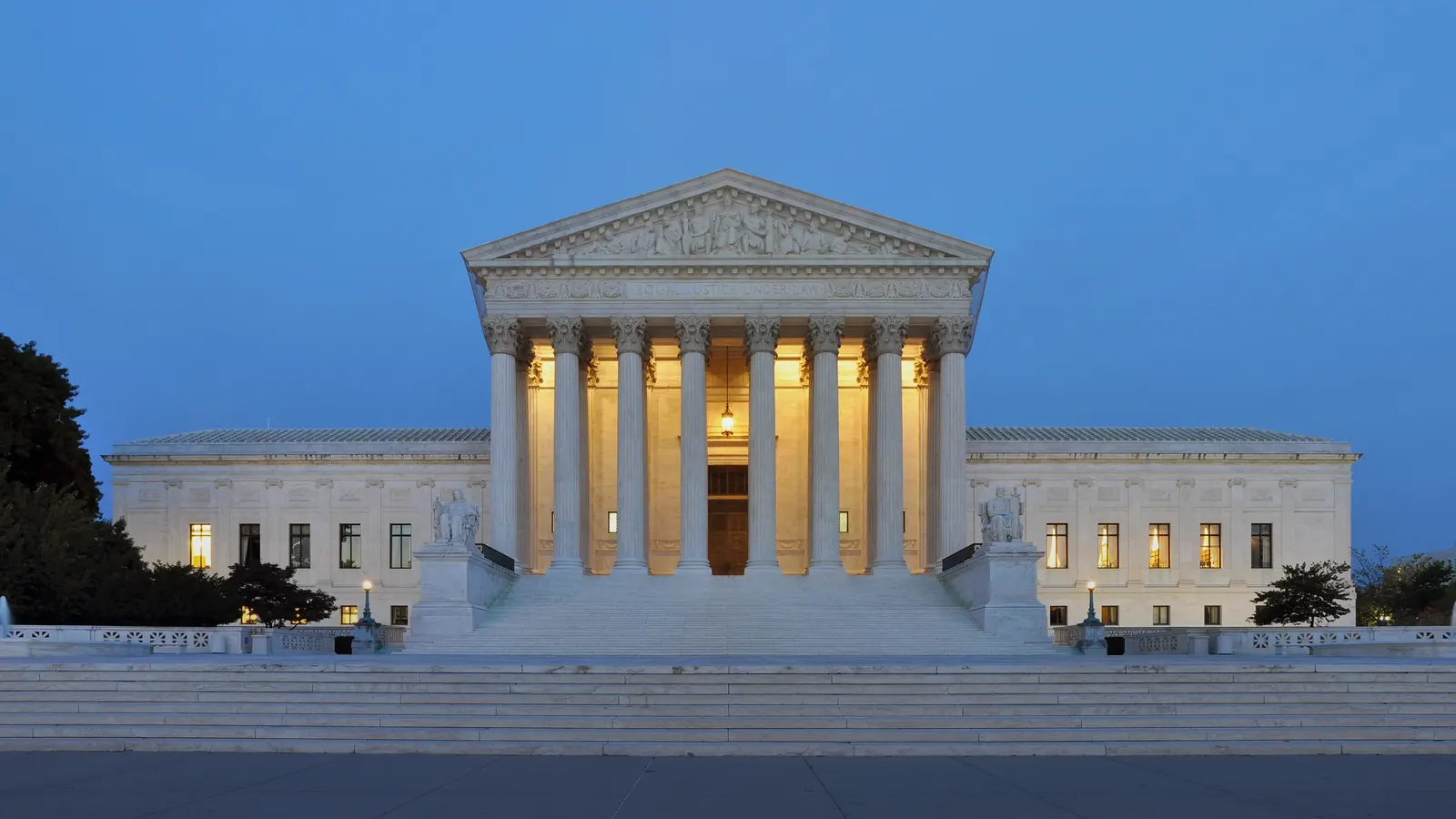
The United States and the Commodity Futures Trading Commission have sued Arkansas and Louisiana in federal court, asking the judges to declare state law pre-empted as applied to event contracts traded on CFTC-regulated designated contract markets, and to enjoin the states from enforcing those laws against CFTC-regulated firms and their affiliates and partners. The Commission announced both cases on 13 November. It said Arkansas is the 11th state it has sued “to vindicate federal sovereign interests,” and Louisiana the 12th “to defend its exclusive jurisdiction over derivatives markets as granted by Congress under the Commodity Exchange Act.”
The Louisiana complaint was filed that day in the US District Court for the Eastern District of Louisiana (Case 2:26-cv-02612). The Arkansas complaint was filed on 12 November in the Eastern District of Arkansas, Central Division (Case 4:26-cv-01255-BSM). It is dated 10 November. The claims in both complaints are allegations. Neither federal court has ruled on them.
The suits follow the United States and the CFTC’s October case against Utah.
Louisiana: a state-court order already in force
According to the federal complaint, on 12 November the State of Louisiana, through Attorney General Liz Murrill, filed an enforcement action in the 21st Judicial District Court, Parish of Tangipahoa, seeking an ex parte temporary restraining order, a preliminary injunction, civil penalties and other relief against 32 entities, captioned Louisiana v. Kalshi Inc. et al., No. 20060004268. The targeted entities, the complaint says, include CFTC-regulated designated contract markets, futures commission merchants and derivatives clearing organisations.
“Later that evening,” the complaint says, the state court granted the petition and entered an ex parte temporary restraining order prohibiting the defendants from, among other things, “[o]perating, offering, listing, accepting, clearing, settling, brokering, making a market in, or otherwise facilitating or offering any ‘event contract’ (also known as a wager) from, to, or on behalf of any person located in the State of Louisiana without a valid license and permit.”
The CFTC’s Louisiana release describes that order as “shutting down the operation of more than 30 companies in the state connected to the trading of CFTC-regulated derivatives products without giving the defendants notice or an opportunity to be heard.”
The federal defendants include the State of Louisiana, Ms Murrill, the Louisiana Gaming Control Board and other state officials. The complaint also records two earlier federal cases brought by CFTC-registered exchanges against state officials, QCX LLC v. Murrill, No. 26-2482 (E.D. La.), and KalshiEX LLC v. Murrill, No. 26-cv-4476 (W.D. La.). It says KalshiEX sought a temporary restraining order and a preliminary injunction in the Western District on 12 November.
Chairman Michael S. Selig said: “Event contracts have traded openly in Louisiana for years, in compliance with the Commodity Exchange Act and CFTC regulations.” He added: “The state’s eleventh-hour ‘emergency’ lawsuit seeking to shut down the entire prediction market industry is naked lawfare and a cynical political stunt. The Commission’s lawsuit seeks to maintain the status quo while the federal courts decide this issue in an orderly manner.”
Arkansas: a state enforcement case against Kalshi
The Arkansas federal complaint names the State of Arkansas and Tim Griffin, in his official capacity as attorney general. It says that on 4 November the state filed an enforcement action in the Circuit Court of Independence County against Kalshi, Inc. and KalshiEX LLC, Arkansas v. KalshiEX LLC, et al., No. 32CV-26-717. The CFTC’s Arkansas release describes that case as a civil enforcement action against Kalshi, “a CFTC-designated contract market,” and says the state is seeking “to halt event-contract trading and impose up to hundreds of millions of dollars in civil penalties on CFTC-registered exchanges.”
The federal complaint sets out the basis for that figure. It says Arkansas is seeking civil penalties under the Arkansas Deceptive Trade Practices Act, which “permits the circuit court to award civil penalties of up to $10,000 per violation.” “If Arkansas seeks civil penalties on a per-violation basis,” the complaint says, “the penalties would dwarf Kalshi’s income from its activities in Arkansas and could reach the hundreds of millions of dollars.” Those are the United States and the CFTC’s allegations about the potential size of the state’s claim. The federal complaint does not itself recite a sum demanded in the state case.
Mr Selig said the CFTC “will continue to defend its sole jurisdiction over these federally regulated markets as granted by Congress under the Commodity Exchange Act, and the Commission will not let state interference thwart its regulatory efforts and destroy federally regulated markets.”
What the federal complaints ask the courts to do
The two complaints seek the same core relief. Each asks for a declaration that the relevant state’s laws “violate the Supremacy Clause and are therefore preempted, unconstitutional, and invalid as applied to transactions listed, offered, or executed on CFTC-regulated DCMs,” and for a preliminary and permanent injunction barring the defendants, their successors, agents and employees, from “investigating CFTC-regulated entities and their affiliates and partners for violations of, or enforcing,” state law as so applied.
The Louisiana complaint also asks the federal court to bar the state from “enforcing or seeking to extend the temporary restraining order entered by the 21st Judicial District Court on November 12, 2026.”
Both complaints argue that event contracts are “swaps” under the Commodity Exchange Act and therefore fall within the CFTC’s “exclusive jurisdiction.” No court has yet decided either of these new cases.
The CFTC’s count of prior cases
Both complaints say the Commission “has brought preemption actions against Arizona, Connecticut, Illinois, Kentucky, Minnesota, New Mexico, New York, Rhode Island, Wisconsin, and Utah.” The case they cite for Rhode Island is KalshiEX LLC v. Furcolo, which was brought by Kalshi against the state’s regulators, not by the United States or the CFTC. The same caveat appeared in our report on the Utah case. The complaints say preliminary injunctions “have been entered in favor of the federal government against state enforcement of preempted gambling laws against CFTC-registered entities in Arizona, Illinois, and Minnesota.”
Why it matters
- A state-court order is already in force in Louisiana. The Louisiana complaint is aimed at an ex parte temporary restraining order entered on 12 November against 32 entities, including exchanges, futures commission merchants and clearing houses. The CFTC says the order was issued without notice or a hearing. The federal complaint asks the Eastern District of Louisiana to stop the state enforcing or extending that order.
- The injunctions sought would reach affiliates and partners, not only the venues. As in the Utah case, the United States and the CFTC want to bar investigations and enforcement against “CFTC-regulated entities and their affiliates and partners.” That matters for brokers, clearing firms and liquidity providers, not only for the designated contract markets.
- The ‘11th’ and ‘12th’ state figures are the CFTC’s own count. The releases use those ordinals. The underlying list of ten prior proceedings is the same as in the Utah complaint, and still includes Kalshi’s Rhode Island case. No ruling has yet been issued in these two new cases.
- The comment deadline on the CFTC’s event-contracts-as-swaps proposal is 18 November. That proposal, which we reported when it was published, is part of the same legal argument the complaints now advance: that event contracts are swaps and therefore sit inside the Commission’s exclusive jurisdiction.
What we are watching
- Whether the United States and the CFTC seek, and whether the courts grant, temporary or preliminary relief in either federal case, including relief from the Louisiana state-court order.
- The states’ responses, and any further action in the Arkansas and Louisiana state cases.
- Comments on the event-contracts-as-swaps proposal, due on 18 November.
Sources
All checked on 16 November 2026 at 06:32 GMT (06:32 London time).
- Commodity Futures Trading Commission, Release 9325-26, 13 Nov 2026; Release 9326-26, 13 Nov 2026.
- United States and CFTC, complaint against Arkansas and Attorney General Tim Griffin, E.D. Ark., Case 4:26-cv-01255-BSM, filed 12 Nov 2026, dated 10 Nov 2026.
- United States and CFTC, complaint against Louisiana, Attorney General Liz Murrill and other state officials, E.D. La., Case 2:26-cv-02612, filed and dated 13 Nov 2026.
News and information only, not investment advice. See our disclaimer.
Risk: Prediction markets carry risk. You can lose the money you stake, and these markets may be restricted or unlawful where you live.
Spotted an error? Email corrections@themidpointnews.com. See our editorial standards, including how we use AI and handle corrections.