 Spotify
 Apple Podcasts

Senate passes the DEATH BETS Act, sending a ban on certain event contracts to the House
The US Senate passed the DEATH BETS Act (S.4035) by voice vote at 6:47pm ET (11:47pm UK) on 19 November, with a Schiff/Curtis amendment, according to the Senate Daily Press floor log. The amendment text is now on congress.gov. It narrows the bill: contracts must expressly reference terrorism, assassination, war or US Armed Forces military operations, and the death limb catches only contracts reasonably expected to resolve principally on a person's death. It also adds a rule of construction. The House still has to act.
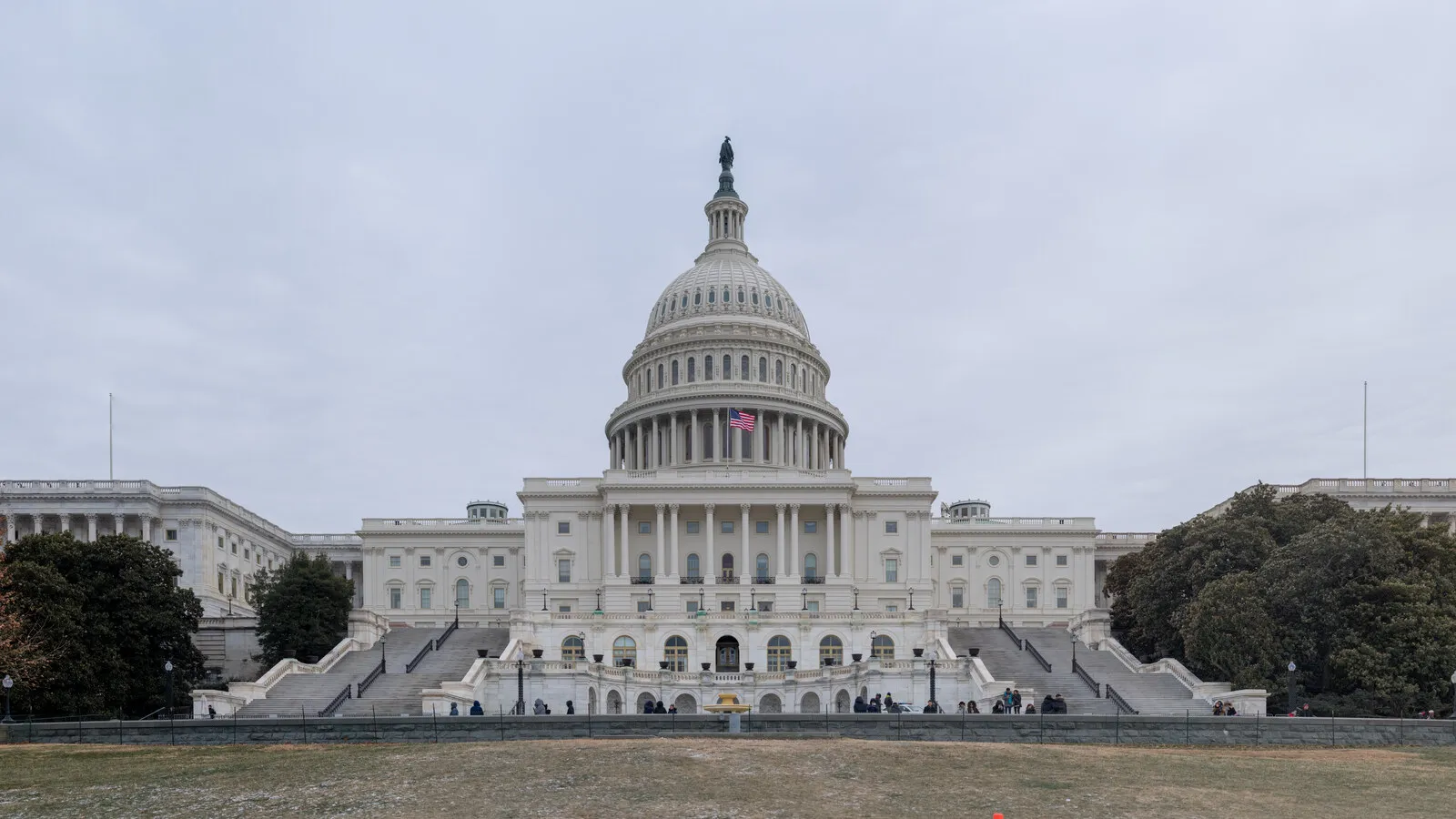
The US Senate passed the DEATH BETS Act (S.4035) by voice vote at 6:47pm ET (11:47pm UK) on 19 November, according to the Senate Daily Press floor log. The log records that Senators Adam Schiff, a Democrat of California, and John Curtis, a Republican of Utah, “spoke on prediction markets” and that Senator Schiff “achieved passage of S.4035, DEATH BETS Act, along with the Schiff/Curtis amendment, by voice vote.”
Congress.gov now records the action. Its actions page lists, on 19 November: the Agriculture Committee discharged by unanimous consent; the measure laid before the Senate; S.Amdt.7031 proposed by Senator Schiff and agreed to by unanimous consent; and “Passed Senate with an amendment by Voice Vote.” The amendment text is printed in the Congressional Record at page S5825, and congress.gov shows the engrossed bill as passed.
The House must still pass the bill in the same form before it can go to the President. A companion House bill, H.R.7942, was introduced by Representative Mike Levin, a Democrat of California, on 16 March and remains in the House Agriculture Committee’s Subcommittee on Commodity Markets, Digital Assets, and Rural Development. Its introduced text matches the Senate bill as introduced, not as amended. It has three cosponsors: Representatives Seth Moulton, a Democrat of Massachusetts, Blake Moore, a Republican of Utah, and Zachary Nunn, a Republican of Iowa. Senator Curtis has been a cosponsor of S.4035 since 30 September.
What the amendment does
The short title, which the amendment leaves unchanged, is the Discouraging Exploitative Assassination, Tragedy, and Harm Betting in Event Trading Systems Act. S.Amdt.7031 strikes section 2 of the bill and inserts a new one, and adds a new section 3. The new section 2 amends section 5c of the Commodity Exchange Act (CEA) (7 U.S.C. 7a-2) by adding a subsection (d) at the end, rather than after subsection (c) as introduced. It provides that a “registered entity shall not list for trading or accept for clearing on or through the registered entity” either of the following:
- “(1) An agreement, contract, transaction, or swap based on an excluded commodity described in section 1a(19)(iv) that expressly references— (A) terrorism; (B) assassination; (C) war; (D) United States Armed Forces military operations; or (E) any similar activity, as determined by the Commission pursuant to rule or regulation to be necessary and appropriate to achieve the purposes of this Act.”
- “(2) An agreement, contract, transaction, or swap based on an excluded commodity described in section 1a(19)(iv) for which the event for the contract, at the time of listing, is reasonably expected to resolve principally based on a death of an individual.”
Compared with the bill as introduced, the Senate text:
- replaces “involves, relates to, or references” with “expressly references” in the first limb;
- adds “United States Armed Forces military operations” to the list of named subjects;
- changes the catch-all from “any similar activity, as determined by the Commission” to similar activity the Commission determines, “pursuant to rule or regulation”, to be “necessary and appropriate to achieve the purposes of this Act”;
- replaces the death limb, which covered contracts that “involves, relates to, or references an individual’s death or could otherwise be construed as correlating closely to an individual’s death”, with a test of whether the contract’s event, “at the time of listing, is reasonably expected to resolve principally based on a death of an individual”.
The “correlating closely” language, which the introduced bill used, does not appear in the passed text.
The rule of construction
The amendment adds a new section 3, headed “Rule of construction”. It reads in full:
“Nothing in this Act or an amendment made by this Act shall be construed to affect the permissibility of any agreements, contracts, transactions, or swaps involving any activity described in section 5c(c)(5)(C)(i) of the Commodity Exchange Act (7 U.S.C. 7a-2(c)(5)(C)(i)) other than the activities described in subsection (d) of section 5c of that Act (7 U.S.C. 7a-2) (as added by section 2).”
Section 5c(c)(5)(C)(i) is the Special Rule under which the Commission may determine event contracts to be contrary to the public interest if they involve activity that is unlawful under federal or state law, terrorism, assassination, war, gaming, or other similar activity the Commission determines, by rule or regulation, to be contrary to the public interest. In plain terms, the clause provides that the Act does not affect whether contracts involving the other activities on the Special Rule list are permissible. The only activities it excepts are those described in new subsection (d).
Section 3 does not mention pre-emption, litigation or the courts, and we report nothing beyond what the text says.
How it sits with the existing rule
The CEA’s Special Rule gives the CFTC a determination tool, and the Commission’s implementing rule, Regulation 40.11, already bars registered entities from listing or clearing contracts that “involves, relates to, or references terrorism, assassination, war, gaming, or an activity that is unlawful under any State or Federal law” under 40.11(a)(1). The bill as passed would move the ban on terrorism, assassination and war contracts from that regulation into statute, so the Commission could no longer change it by rule. It is not a new ban for those subjects. Two subjects in the bill are not named in Regulation 40.11(a)(1): United States Armed Forces military operations, and contracts expected to resolve principally on a death.
The statutory trigger, “expressly references”, is narrower than the “involves, relates to, or references” wording of Regulation 40.11(a)(1), so the two tests would not be identical. The bill does not repeal the regulation or the Special Rule.
The prohibition would apply to “registered entities” as defined in the Act, which includes designated contract markets, derivatives clearing organisations, swap execution facilities and swap data repositories (7 U.S.C. § 1a(40)). By its terms it would not reach platforms not registered with the Commission.
In June, the Commission proposed amendments to Regulation 40.11, including a definition of “gaming”. Comments were due on 27 July 2026, and no final rule appears in the Federal Register. An October proposal to treat event contracts expressly as swaps, which we reported, had a comment deadline of 18 November.
Why it matters
- The ban would move from regulation into statute. Regulation 40.11(a)(1) already bars terrorism, assassination and war contracts, but the Commission can amend it. The passed text would put that bar, with military operations named, beyond the Commission’s power to change by rule.
- The Senate narrowed the bill. An express reference is required for the first limb, and the death limb turns on how the contract is expected, at listing, to resolve. That is a narrower test than the introduced “correlating closely” wording.
- The Commission still has a role. The catch-all for similar activity depends on a Commission rule or regulation.
- A rule of construction leaves the Special Rule’s other categories unaffected. Contracts involving the other listed activities are neither newly barred nor newly permitted by the Act.
- The House has not acted. H.R.7942 is the introduced text, not the Senate text. The House would have to pass the Senate bill unchanged, or amend it and send it back.
What we are watching
- Whether the House takes up S.4035 or amends H.R.7942 to match the Senate text.
- Whether the CFTC adopts, revises or leaves pending its June proposal on Regulation 40.11.
- Any statement from the Commission or a registered prediction-market venue on the passed text. None was found on 20 November.
Sources
Checked on 20 November 2026 at about 3:10pm UK. No market prices or volumes are quoted in this story.
- Congress.gov, S.Amdt.7031 text, Congressional Record page S5825, proposed 19 November 2026.
- Congress.gov, S.4035 text, engrossed in the Senate, and all actions. GovInfo also hosts the engrossed text and the Congressional Record, page S5825, 19 November 2026.
- GovInfo, S.4035 as introduced, 10 March 2026.
- US Senate Daily Press, Thursday, November 19, 2026 floor log, entry at 6:47pm ET (11:47pm UK).
- Congress.gov, H.R.7942 all information and introduced text.
- US Government Publishing Office, 7 U.S.C. § 7a-2 and 7 U.S.C. § 1a, 2023 edition.
- Electronic Code of Federal Regulations, 17 CFR 40.11.
- Federal Register, Prediction Markets; Public Interest Determinations, 91 FR 35806, 12 June 2026, and CFTC Release 9249-26, 10 June 2026.
- Federal Register, Further Definition of “Swap”-Inclusions, 91 FR 66022, 19 October 2026, and CFTC Release 9310-26, 9 October 2026.
Updated 20 November 2026: this article was revised after the text of the Schiff/Curtis amendment (S.Amdt.7031) was published in the Congressional Record and on congress.gov, with the bill as passed by the Senate. An earlier version described the bill as introduced.
News and information only, not investment advice. See our disclaimer.
Risk: Prediction markets carry risk. You can lose the money you stake, and these markets may be restricted or unlawful where you live.
Spotted an error? Email corrections@themidpointnews.com. See our editorial standards, including how we use AI and handle corrections.